Financial Education Standards and Policy in the Philippines
Strengthening Educator Competency and Financial Literacy Outcomes
NFEC’s financial educator standards define the knowledge, instructional skills and professional practices needed to teach personal finance effectively. They give educators and organizations a common framework for preparing instructors, reviewing teaching quality and evaluating learner progress.
For financial educators in the Philippines, this professional framework sits alongside national education policy and public financial-literacy initiatives. The directory below identifies those Philippine sources by their actual role: legislation, education policy, strategy, regulation, public learning program or research.
Accredited & Independent
As an IACET Accredited Provider, NFEC applies rigorous standards to its continuing education and training. Its educator framework emphasizes instructional design, learner-focused teaching, measurable outcomes and ethical practice.
NFEC developed its standards independently, without outside sponsors directing the content. This independence keeps the focus on educational quality and the financial well-being of learners.
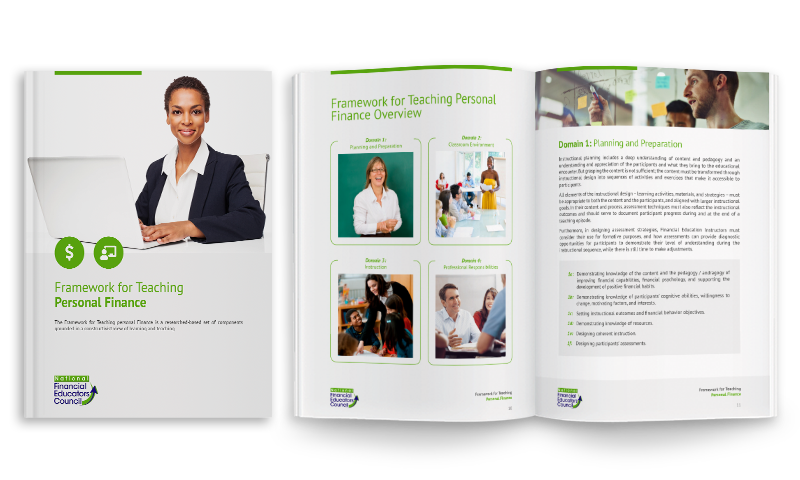
Standards for Financial Education Practitioners – Framework for Teaching Personal Finance
The NFEC introduced the Framework for Teaching Personal Finance, a comprehensive set of international standards designed specifically for financial education instructors. This Framework outlines clear, actionable guidelines that support educators to deliver more effective instruction while helping learners build practical money management skills they can apply in everyday life.
Developed in partnership with the Danielson Group and a cross-disciplinary team of experts in education, psychology, finance, and evaluation, the Framework aligns with the InTASC core teaching standards. It adapts Charlotte Danielson’s well-established instructional model to the context of financial literacy, using a constructivist approach to learning. The result is a structured system of 22 research-based components that define the essential knowledge, skills, and observable teaching practices educators are expected to demonstrate. These components offer a clear pathway for implementing instructional strategies that lead to measurable improvements in learner outcomes.
Widely recognized and supported by educators, administrators, and policymakers, the Danielson Framework remains the most widely used teaching model in the United States, with adoption across more than 20 states. By tailoring this proven model to financial education, the NFEC provides a rigorous, standards-based approach that enhances instructional quality and enables programs to clearly demonstrate their impact on participants.

Philippine Legislation, Policy, Public Programs and Research
Educator standards and learner-focused policy serve complementary purposes. NFEC’s framework describes effective teaching practice; Philippine laws, education policy and public programs establish local context and support financial capability. The official references below make those roles clear.