CFEI® Graduate Bonus: Learner Experience and Measurement Resources
Graduating from the CFEI® program brings both a professional credential and resources to support program delivery. NFEC’s current graduate bonus includes a complimentary Program Toolkit, listed at a US$349 value, with tools for the learner experience, assessments and reporting.
These resources help educators in the Philippines organize professional programs and demonstrate their results. They are the established NFEC graduate resources described below.



Certified Financial Education Instructor® (CFEI®)
The Leading Financial Literacy Certification for Individuals Teaching Personal Finance
The Certified Financial Education Instructor® (CFEI®) is an industry-leading credential that prepares you to teach personal finance with confidence – and to prove your program’s impact.




Topics & Requirements
The CFEI® coursework meets standards for the highest academic rigor while providing practical financial education knowledge. Graduates possess the skills and teaching techniques that help them motivate, engage, educate, and move participants of all ages to take positive financial action.
Topics Covered
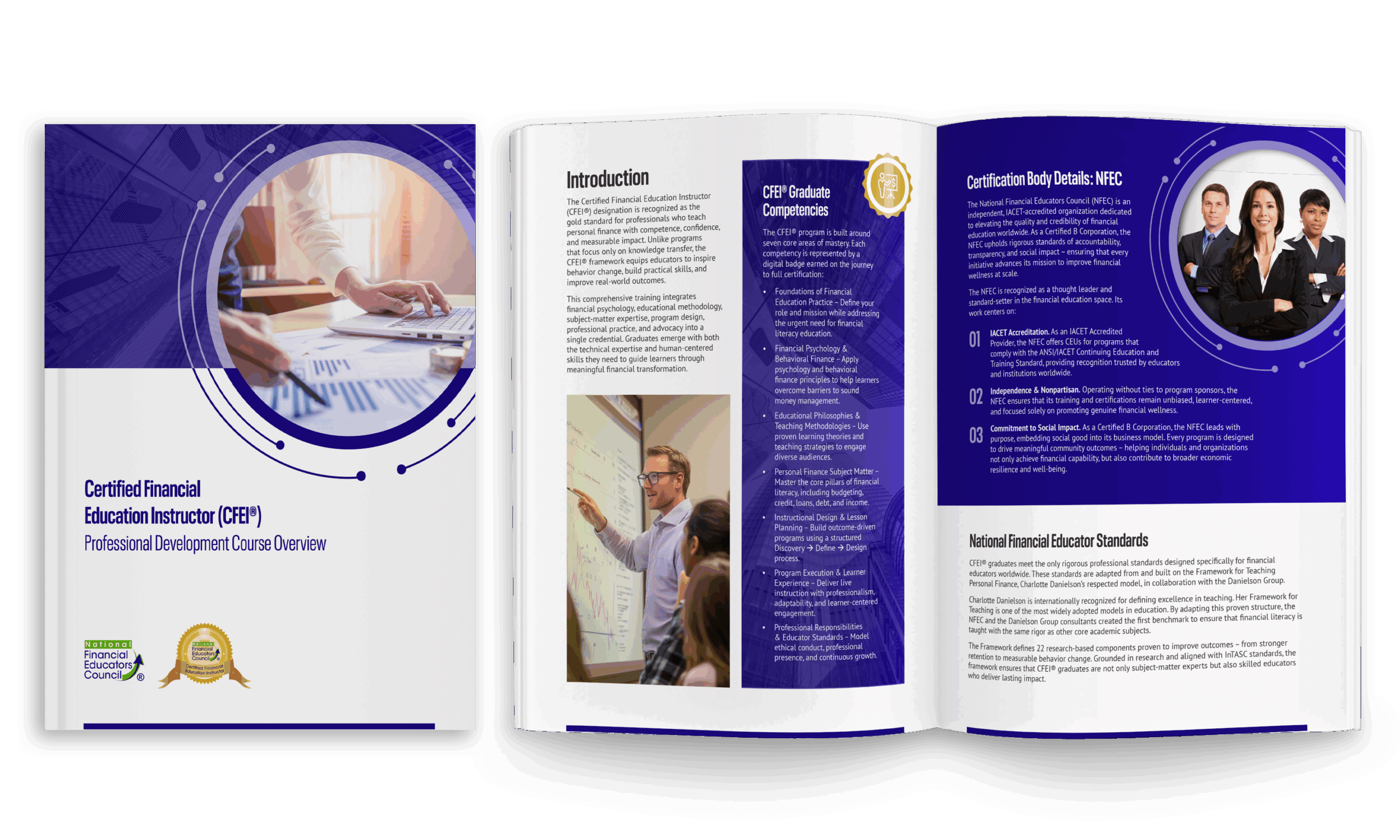
The core modules covered in the CFEI training equip educators with the knowledge, skills, and tools to design and deliver high-quality financial education that produces measurable results.

Foundations of Financial Education Practice
Clarity of mission and role as an educator, with a focus on the urgent need for financial literacy and advocacy for learners across all life stages and communities. You’ll gain the confidence to position yourself as a leader in this movement, equipped to inspire change and expand access to financial education where it’s needed most.

Financial Psychology & Behavioral Finance
In-depth knowledge of behavioral finance principles, financial psychology, and change models that empower learners to overcome emotional, cultural, and cognitive barriers to sound money management. This knowledge helps you connect with people on a deeper level, guiding them to lasting behavior change rather than short-term fixes.

Educational Philosophies & Teaching Methodologies
Application of proven learning theories and instructional strategies to engage diverse audiences, foster retention, and build practical financial skills with confidence. By learning how to adapt your approach, you’ll become a more effective educator who can meet learners where they are and drive real impact.

Personal Finance Subject Matter
Deep content knowledge across the core pillars of financial literacy: budgeting, saving, credit, loans and debt, income, account management, and supporting financial systems. You’ll be fully prepared to answer questions and guide learners through everyday money decisions with clarity and authority.

Instructional Design & Lesson Planning
Expertise in designing high-impact programs using the structured Discovery → Define → Design process, ensuring alignment with learner needs, educational standards, and measurable outcomes. This skill ensures that your programs are professional, well-structured, and capable of demonstrating measurable success to funders and stakeholders.

Program Execution & Learner Experience
The ability to deliver live sessions with professionalism and adaptability, creating safe, supportive, and engaging environments that motivate learners to take real-world action. You’ll gain practical strategies to handle any teaching environment with confidence, whether in classrooms, workshops, or online sessions.

Professional Responsibilities & Educator Standards
A demonstrated commitment to ethical practice, professional presence, accurate recordkeeping, and continuous professional development – ensuring trust, credibility, and long-term program excellence. This foundation strengthens your reputation as a trusted professional whose work meets the highest standards in education.

The CFEI® program is designed to be flexible, accessible, and supportive.
Graduation Requirements
- Study: 48 professional development hours, delivered online and self-paced.
- Continuing education: 4.8 CEUs upon successful completion of the coursework and required steps.
- Assessment: at least 80% on the final exam and all chapter knowledge checks.
- Access: a computer, internet connection and audio capability; no previous teaching or financial experience is required.
- Participation: the main-site course information specifies a minimum age of 13 and offers a process for requesting reasonable accommodations.
Review the consolidated course information and complete enrollment terms below before purchasing. See the learning and credentialing path.
Graduate Survey Data
NFEC collects feedback throughout the course to understand participants’ progress and improve the training. The figures below summarize self-reported experiences from 1,655 graduates of the global program, including their confidence and their experience delivering financial education.
Increase of Confidence
Do you feel more confident and qualified to empower others with financial wellness programming?
Recommend
Would you recommend that other financial educators complete this class before teaching financial literacy?
Standards for Financial Educators
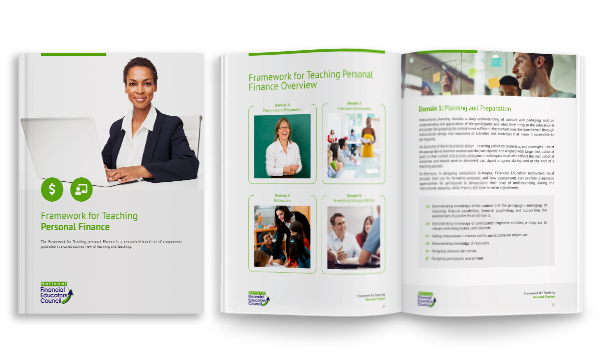
The NFEC developed the Framework for Teaching Personal Finance, the first – and only – national industry standards for financial education instructors. The Framework establishes clear benchmarks to help educators teach more effectively and equip learners with practical financial skills.
Developed in collaboration with the Danielson Group and aligned with InTASC, the Framework adapts Charlotte Danielson’s educational model for financial literacy. Grounded in constructivist learning, the standards define 22 evidence-based components that specify the knowledge, competencies, and performance expectations educators must demonstrate; and provide a roadmap of instructional practices tied to measurable participant gains and ongoing professional development. Danielson’s Framework for Teaching is backed by evidence-based research and widely accepted by educators, administrators, policymakers, and academics. The framework defines the skill sets distinguished educators should possess and performance levels that define educator capabilities. The Framework for Teaching has been adopted as a model approved in more than 20 states, making it the most widely-used teaching model in the US.
What’s Provided in The CFEI® Coursework
Training & Resources
Receive the training and resources you need to earn your Certified Financial Education Instructor® credential. The program combines practical lessons, hands-on activities, and tools designed to build your teaching skills and demonstrate measurable impact.
Testing & Graduation
The certification exam is delivered online; a passing score of 80% is required. If you don’t pass on your first attempt, you may retake the exam. Once you pass the final exam and all chapter tests, you have officially graduated and receive the following:
Awareness, Advocacy, & Funding
To highlight your accomplishments, help you raise awareness, and garner funding for your program, the NFEC provides an awareness package that builds your reputation as a qualified financial educator. Get exposure to our website visitors and highlight your role as a financial education advocate with these complimentary resources:
Limited Bonus for CFEI Graduates
CFEI® graduates receive a complimentary Program Toolkit, listed on NFEC’s main course page at a US$349 value. The resources support a professional learner experience and help educators document their programs:
- Before delivery: checklists, pre-participation surveys, marketing and registration templates, and email sequences.
- During delivery: organizer support resources, promotional handouts and event checklists.
- After delivery: recognition materials, follow-up assessments and continuing education resources.
- Measurement and reporting: assessment banks, KPI templates, impact reporting and a case-study template.
US$349 value, provided complimentary to CFEI® graduates.